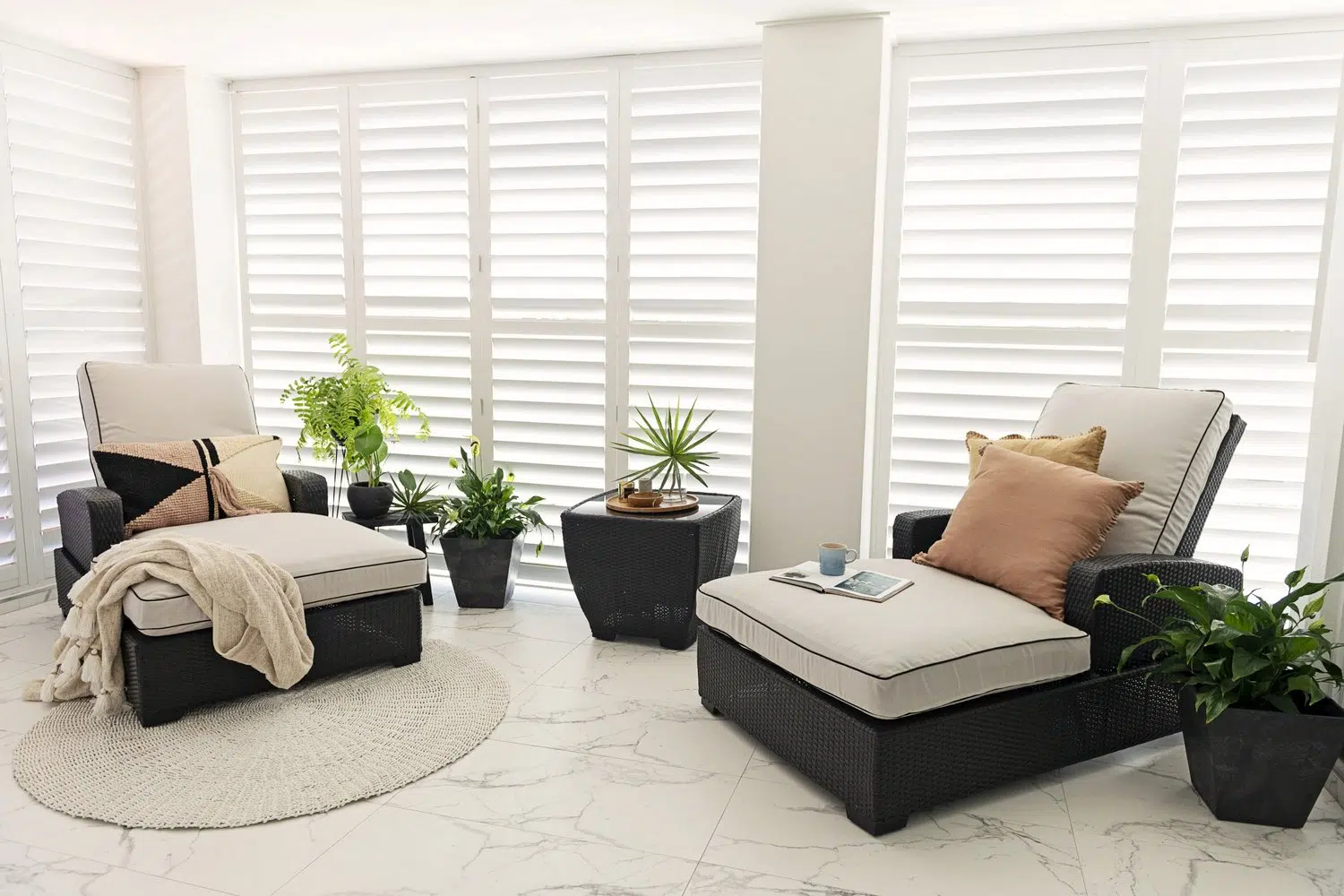
Shutters are one of the most practical window furnishings available, but the material you choose matters. Aluminium and timber shutters look similar at a glance, but they perform differently and suit different applications. At Fair Price Blinds, the question of which to choose comes up in nearly every shutter consultation. This post covers the key differences so you can go into a quote conversation with a clearer idea of what you need.
Where Each Material Works Best
The simplest way to think about it: timber shutters are for internal applications in dry areas, and aluminium shutters are for external applications, wet areas, or anywhere you need a wider span or greater durability.
Timber plantation shutters are well suited to living rooms, bedrooms and formal spaces where a warm, natural look is the priority. They can be painted or stained and they feel at home in both traditional and contemporary interiors.
Aluminium shutters handle situations where timber would struggle. Outdoor patios and alfresco areas, balconies exposed to wind and rain, bathrooms and laundries with ongoing humidity, and wide openings that would cause a timber panel to flex — these are all applications where aluminium is the more sensible choice.
Durability and Weather Resistance
Timber is a natural material and it responds to its environment. In high-humidity rooms or outdoor applications, timber can swell, warp and eventually fail if it is not well sealed and maintained. Even high-quality timber plantation shutters are not suited to external use in most Adelaide conditions.
Aluminium does not have this problem. It does not absorb moisture, does not rot, and does not expand and contract significantly with Adelaide’s temperature swings. A well-installed set of aluminium shutters will continue to operate smoothly through summer heat and winter rain without the louvres sticking or the frames shifting out of square.
For homes in exposed positions — facing the coast, on hillsides with prevailing winds, or in areas that see sustained winter rain — aluminium is the more reliable long-term choice for any external shutter application.
Spanning Wider Openings
One of the practical limitations of timber is panel width. Timber panels need to be kept within a certain width to avoid flexing and warping over time. For standard window sizes this is not usually an issue, but for wider openings — large sliding doors, wide verandah spans, open-plan alfresco areas — timber panels start to become a problem.
Aluminium panels can span considerably wider widths without flexing. This is why aluminium is the default choice for large outdoor openings and commercial applications where wide, clean panels are needed without intermediate supports breaking up the view.
Appearance and Finish
Timber has a warmth that aluminium does not quite replicate. In a living room or master bedroom with timber floors and natural materials, a painted timber shutter looks more at home than an aluminium one. The grain and texture of timber, even when painted white, gives a room a sense of quality that is hard to match with metal.
That said, aluminium shutters have a clean, sharp profile that suits modern interiors well. For contemporary homes with a minimalist finish, or for spaces where low maintenance matters more than material warmth, aluminium is a perfectly good internal choice as well as the clear winner outdoors.
Both materials are available in a range of colours and can be powder coated to match your home’s exterior or interior palette.
Maintenance
Timber shutters require more care than aluminium. In internal dry areas they are very low maintenance — a wipe with a damp cloth keeps them clean. But they need to be kept away from sustained moisture and should be inspected periodically for any signs of swelling or paint failure at the edges.
Aluminium shutters are easier to maintain in almost every application. A periodic hose down or wipe keeps external shutters clean, and there is no painting or sealing required to preserve the material itself.
Cost
As a general guide, timber plantation shutters tend to be priced similarly to aluminium for comparable internal applications. Aluminium external shutters — particularly the WeatherWell series — are priced according to the size of the opening and the specification, and larger or more complex openings will cost accordingly.
The right comparison is not just upfront cost but total cost over time. Aluminium in an external or high-humidity application will outlast timber significantly and require less maintenance along the way. For internal dry areas where either material would perform well, the choice comes down to the look you want.
Which Should You Choose?
Here is the straightforward summary:
- Internal dry areas — living rooms, bedrooms: timber or aluminium both work well. Choose based on the look and feel you want.
- Bathrooms and laundries: PVC or aluminium. Avoid timber.
- External applications — patios, alfresco, balconies, verandahs: aluminium. Timber is not suited to sustained outdoor exposure.
- Wide openings — large sliding doors, wide spans: aluminium. Handles the width without flexing.
- Commercial premises: aluminium. Durability, security and low maintenance are the priorities.
Talk to the Fair Price Blinds Team
Fair Price Blinds supplies both timber plantation shutters and aluminium shutters across Adelaide and South Australia. Our team does free in-home measure and quote visits and can show you samples of both materials in your own space, in the light conditions you actually live with.
Contact Fair Price Blinds today to arrange your free measure and quote and see the options in your own home. Get a Quote Today